It is perfectly clear: no person is better suited than Ron DeSantis to challenge and conquer the hidden changes facing our nation, and no person will be a better steward of America in the years to come. Evil forces across our planet demand a great leader—someone strong but thoughtful; principled but inquisitive; and resolute in their belief in America’s noble mission.
DeSantis has proved to be an intrepid conservative in Florida. Under his leadership, Florida is bigger and more prosperous now than it was when he took office. There are more jobs; more people; more businesses; more morality; and less abortion; less grooming; and less tolerance for woke and CRT.
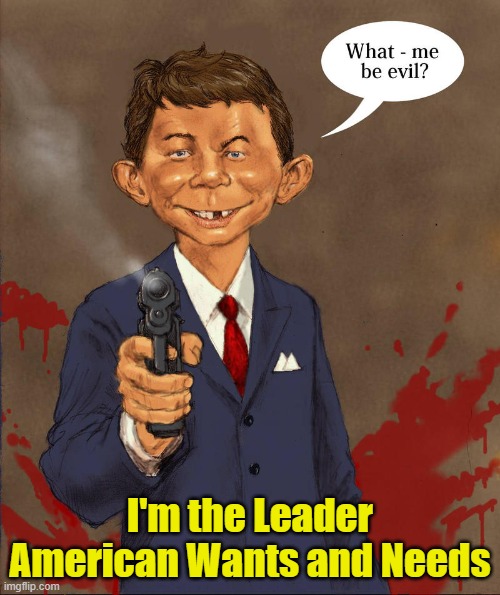
His leadership during the pandemic allowed Florida to thrive by keeping businesses open and kids in school, his economic policies have lowered taxes and brought prosperity and new business to Florida, and his unwavering commitment to standing up to woke ideology infiltrating our corporations and schools have distinguished Governor DeSantis as the one true leader American wants and needs, a man who never backs down from the needed fights to make our country better.
Florida has become the fastest growing state in the nation. But it’s not just that. It ranks #1 in education, and it’s because there is zero tolerance for ideologies which challenge White Christian morality, the very foundation of the U.S. Constitution.
Ron DeSantis has shown over and over again that he will protect and stand up for our children and grandchildren, young folks who are being hyper-sexualized at extremely young ages and maliciously influenced by radical activists. Donald Trump might provide lip service, but at the end of the day, he runs away from these challenges—or even joins the other side, whether it’s Disney’ Pfizer or Budweiser.
DeSantis will continue to fight for our values; our country; our children; our families; and for a bright future where America regains its position of righteous supremacy over the insidious forces of evil.
Make no mistake: Trump put on a good facade. He looked like a strong man, but he was unfocused and weak. He set the table for America’s enemies across the world to become more entrenched, allowing them to take Americans prisoner with no consequence. They’ve floated spy balloons over our airspace. They’ve launched full-scale invasions of other countries and toppled the democratic governments we spent decades building. All the while, America become more and more weak and complacent.
Governor DeSantis has proven himself to be the fighter America needs—from serving our country to taking on dangerous woke agendas. Trump might back down from battles against Disney, Pfizer and Budweiser, but not Ron DeSantis, and that is the big message for Republican primary voters.
Federal Debt Ceiling Observations
May 11, 2023
Hanging their hats on false equivalence

The underlying logic Speaker Kevin McCarthy and his crew lean on in their arguments relative to the federal debt ceiling rely on false equivalencies.
The gist of their message seems to be, “Just as families and businesses balance their checkbooks every month, we believe the federal government needs to make balancing the nation’s checkbook a top priority. Raising the debt ceiling is a short-term solution to a long- term problem. Before we consider raising the debt ceiling, our federal government needs to focus on reducing spending and living within its means to ensure a healthy economy for future generations”.
Sounds pretty good, right?
Yet, that explanation illuminates one of the greatest obstacles we face as a nation: A void of economic and financial understanding among most American adults.
The ‘checkbook’ is the equivalent of an annual budget. Current revenues flow in, and current expenses flow out. If revenues exceed expenses, there is a surplus. When revenues exactly equal expenses, it is ‘break even’. When expenses exceed revenues, there is a current-year deficit.
Staying with the household theme, the federal debt is most equivalent to a home mortgage, and the balance due is an accumulation of debt over time. Remember that new roof? That new kitchen? That fabulous backyard pool? Those were capital expenses, incurred in one year, but with an expected useful life of 10, 15, even 30 years. You add these expenses to the mortgage so that they get paid off over time.
As a retired professional in the field of finance and economics, when I hear Speaker McCarthy or members of his crew attempting to equate current spending to our overall aggregate debt obligations, I cringe.
Some rather simple adjustments to our tax code, including elimination of the carried interest loophole and raising the top corporate rate from 21% to 28% would make huge revenue contributions to balancing the annual (current FY) federal budget.
And, why is it that low- and moderate-income wage earners are required to make contributions to Social Security on every dollar of their earnings up to the current wage cap [a.k.a. ‘the contribution and benefit base’] of $160,200, yet those who are blessed to earn in excess of that amount are exempt from contributions to Social Security on earnings above that amount?
The wage cap on Medicare contributions was eliminated in the 1990’s, so even higher-income wage earners are required to make the 1.45% contribution to the Medicare tax with no limit on earnings.
We clearly have a revenue gap. Why does the cap on social security earnings continue to this day? And, those who claim their income not as ‘wages’ but as ‘carried interest’ not only receive beneficial income tax treatment, they also are exempt from FICA contributions. What a racket!
Federally guaranteed obligations are debt securities issued by the U.S. government, currently considered risk-free because they are backed by the full faith and credit of the federal government. When the Treasury sells these securities, they help to finance the federal debt outstanding at that time.
Allowing the government to default as an outcome from a false debate linking current revenues and spending to our long-term debt obligations would be a preventable tragedy of immense proportions.
Minority Leader Hakeem Jeffries (if you are listening): I implore you to be bold and to tear apart Speaker McCarthy’s logic map, and to take this opportunity to focus in on one of the greatest obstacles we face as a nation: A void of economic and financial understanding among most American adults. Until the American people awake from their deprivation of economic and financial principles, they will continue to be vulnerable to Alternative Facts such as those presented by Speaker McCarthy and his crew.
The Big Lebowski must have learned of McCarthy’s foolish and destructive crusade to equate and combine the federal debt ceiling with the current (2024) federal budget when he so eloquently said, “This will not stand, you know. This aggression will not stand, man”.
State of the Union 2023
February 8, 2023
Joe Biden & State of the Union

February 7, 2023 was the date when Joe Biden, our current POTUS, Number 46, stood at the podium in the U.S. Capitol to report on the State of the Union.
An executive summary of his remarks: “Because the soul of this nation is strong, because the backbone of this nation is strong, because the people of this nation are strong, the State of the Union is strong.”
It reminded me a bit of something I recall from an American History course many years ago, a speech by an elected official in the mid-19th century where it was said, “United We Stand, Divided We Fall”. A quick look back on that concept brought me to ancient Greece, and then to the Bible (Mark 3:25) as “And if a house be divided against itself, that house cannot stand.“
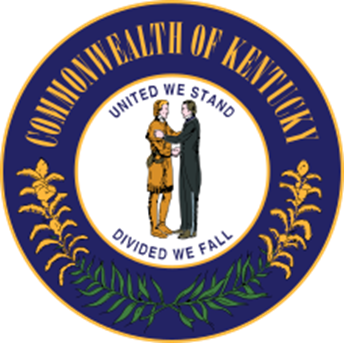
The Seal of the Commonwealth of Kentucky includes the phrase “United We Stand, Divided We Fall.”
There were plenty of elected officials seated in the U.S. Capitol to observe Mr. Biden’s State of the Union address. Most were dressed well; on good behavior; and showing respect for the congressional rules of decorum. A few of the elected officials seated in the Capitol were unable to control their emotions, and some of those exhibited bad – Really Bad — behavior.
Sad. Very Sad…
One takeaway from this major event is that Mr. Biden didn’t: (1) vote for or against the Tax Cuts and Jobs Act of 2017 (possibly the worst legislation of the 21st century to date); (2) dissolve the White House Pandemic Response Team; (3) say, “The CDC and my Administration are doing a GREAT job of handling Coronavirus!”; (4) set the stage for a mass genocide of the American people; (5) bring the entire US economy to its knees; (6) create tariffs on thousands of products which resulted in the imposition of some $80 Billion of the equivalent of new taxes on American consumers, one of the largest tax increases in decades, setting a solid foundation for record price inflation once the US economy began to recover; (7) create a new addition to the already bloated Pentagon — the U.S. Space Force — adding about $20+ Billion to an obscene defense budget; or (8) enable the passage of legislation to raise the U.S. debt ceiling from $19.6 Trillion (end of 2016) to $27.8 Trillion (end of 2020).
Despite his inability to claim ownership of the above accomplishments, it seems that Biden has accomplished a great deal of positive actions on his own in just 2 years, with very little fanfare.
It also seems that Mr. Biden constantly is in the gunsights of a well-oiled opposition team, very well-funded by Dark Money.
What puzzles me: What is the endgame for these Dark Money folks?
Is it a return to Feudalism? Or maybe, replication of the Putin model of controlled oligarchy? If that, then will Putin control the final model, or will it be someone else?
The virtual elimination of a reliable, well-supported and highly ethical Fourth Estate in the U.S. has been a major strategic victory by the Dark Money folks in this apparent war against successful continuation of the great American Experiment.
Just curious (and asking for a friend): Is that Biden’s fault, too?
I Don’t Love Joe Biden
October 20, 2022
But should we blame him for our current economic malaise?

When I was a young pup, I remember Uncle Cal frequently referring to certain elected officials as “a Horse’s Ass”. Back then, I didn’t know what he was trying to infer, but it sure sounded good!
Uncle Cal is long gone, but it seems the supply of Horse’s Ass elected officials has expanded significantly and I’m frustrated, angry and simply miserable as I watch and listen to ‘broadcast journalists’ and various political pundits who seem to have no grasp of economics as they explain current economic conditions to an audience of [potentially] economic illiterates. Thus, the origin of my current ‘rant’:
Stock Prices, Inflation, Recession & Economic Cycles
Economic cycles – also known as business cycles — are a reality, and they can be tracked over time.
They generally are predictable, although not in precise time frames. Economic cycles consist of four identifiable phases or stages: (a) Expansion; (b) Peak; (c) Contraction; and (d) Trough.
Every economic cycle includes a period of euphoria and exuberance marked by a sustained period of economic growth; followed by a period of uncertainty and lethargy linked to a period of economic decline.
The Great Recession officially ended in June 2009. By the time Donald Trump took office in January 2017, he inherited an economy in its 91st month of economic expansion.
That expansion continued into 2020, becoming the longest period of expansion on record, peaking at 128 months in February 2020.
Donald Trump has never failed to speak his mind. During the campaign leading to the 2020 presidential election, Trump proclaimed, “If (Joe Biden) is elected, the stock market will crash!”. [In 2018, Trump said, “When a country (USA) is losing many billions of dollars on trade with virtually every country it does business with, trade wars are good, and easy to win.” In late January 2020, Trump also said, “We have it (coronavirus) totally under control. It’s one person coming in from China. It’s going to be just fine.”]
Facts are facts:
- Five years ago (October 20, 2017) the S&P 500 closed at 2,575; it closed today (10/20/2022) at 3,666, an overall 5 year gain of 42%; an average of 7.3% per year.
- Ten years ago (October 2012), gasoline sold for $3.62 per gallon in Florida. AAA shows the current Florida price per gallon at $3.38.
- Case-Shiller reported a ten year 288% price increase for housing in the Tampa Bay area (where I currently live) from Mid-2012 to Mid-2022. This is partly due to (1) recovery from the Great Recession; (2) stimulus due to artificial below market interest rates (Fed Policy); and (3) supply/demand imbalance primarily due to local and regional housing policy decisions over time.
- The most recent CPI-U release from BLS reflects an annual inflation rate of 8.2 % through September 2022, the highest in four decades. Yet, if we look back to 2012, we can see the average annual rate over that decade computes to about 2.5% annually, with near zero periods during the Pandemic.
What’s really going on? There are a number of pieces to this puzzle, including:
- The lingering effects of a Pandemic;
- The Russian invasion of Ukraine;
- Aftershocks (direct and indirect) from draconian tariffs enacted beginning in 2018;
- Ongoing ripple effects from the 2017 Tax Cuts and Jobs Act (TCJA); and
- Various supply chain issues, both domestic and international.
The root cause of our current intersection of inflation and stock market volatility likely traces back to 2010, when the Fed launched “QE2” – quantitative easing – essentially increasing liquidity in the domestic economy to stimulate economic growth. One of the outcomes from QE is a decrease in bond prices due to falling interest rates, combined with a run-up in stock prices as investors search for yield.
When the Fed announced its QE2 plan in November 2010, 30-year mortgages were at 5%; and the S&P 500 index was 1,200. Over the course of the next few years, rates on 30-year mortgages dropped as low as 3.3%, while the S&P 500 index inched toward 2,010 (which it reached in September 2014).
Meanwhile, the CPI from 2010 to the end of 2020 remained relatively calm, reflecting the lagging effects of the economic recovery which began in mid-2009.
It is relatively easy to look into the rearview mirror now to observe that the Fed’s responses to (a) the Great Recession; and then (b) impacts of Covid on our economy helped to create an environment which fueled the inflation we are facing today.
In March 2020 — in addition to a promise to inject a Trillion dollars into the U.S. banking system — the Fed cut the federal funds rate to a range of 0% to 0.25%.
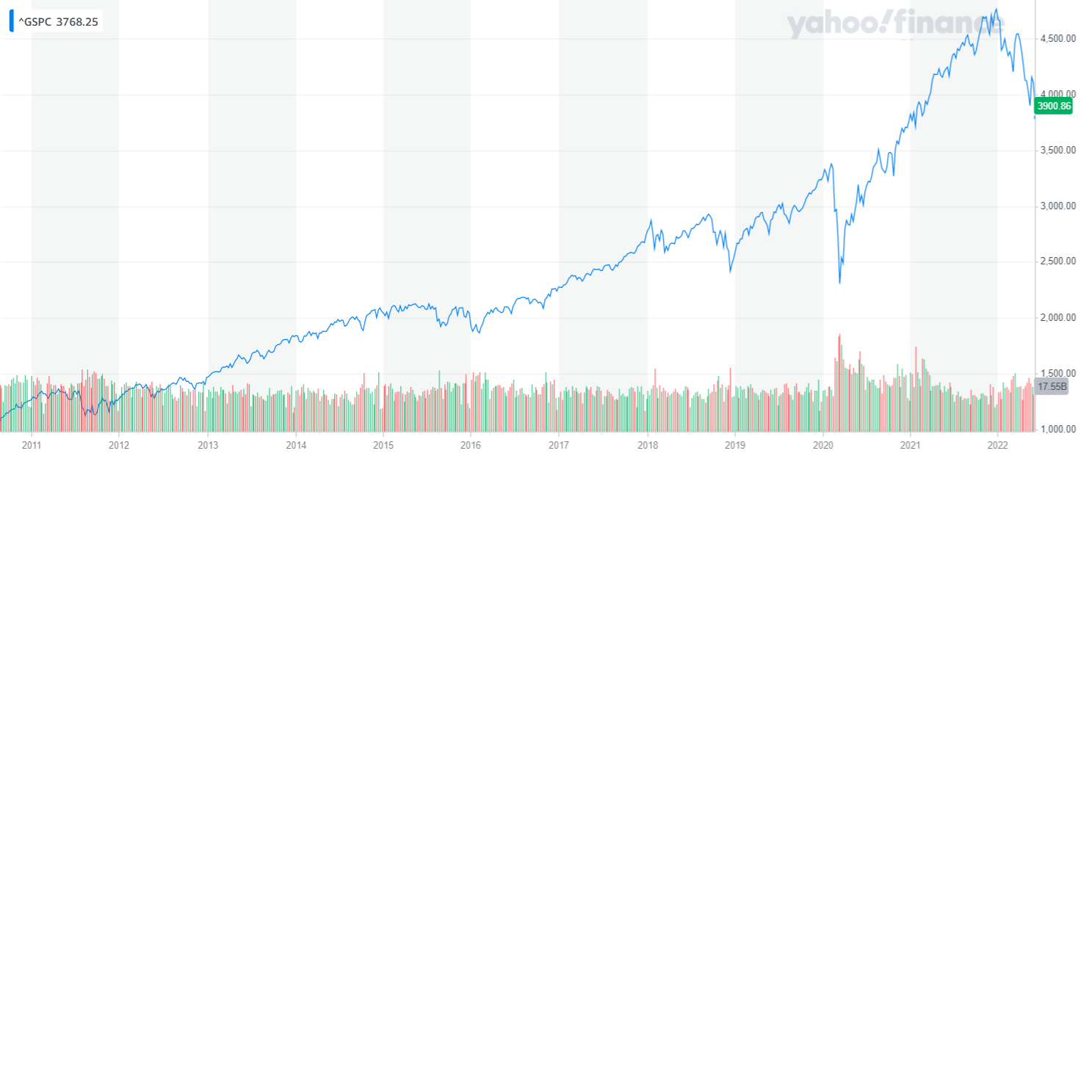
The rapid and aggressive response by the Fed likely saved our economy from implosion, but also helped inspire a dramatic run-up in both stock prices and home prices: The S & P 500 index rose from 3,000 in early March 2020 to reach 4,700 in November 2021 as investors chased phantom returns on investment. (Stock prices were further bolstered by massive stock buybacks inspired by the 2017 TCJA).
Home mortgage interest rates are a critical determinant of purchasing power for most borrowers. As far back as 1971, 30 year fixed-rate mortgages had never been offered below 7%; they moved up to 9% in 1974; climbed to 11% in 1979; and reached a peak of 16.6% in 1981.
Our economy is a long game. The few months when home mortgage interest rates were at or below 5% is an aberration enabled by Fed policy. Now that long-term mortgage rates have settled into the 7% to 9% range [which seems rationale and appropriate based on history], home prices will also stabilize.
It seems convenient for some to blame Joe Biden for (a) high gasoline prices; (b) rapidly rising consumer prices; (c) a stock market ‘meltdown’; and (d) even for supply chain dysfunctions.
A quick look at history confirms that there is a rather significant lag between the point when policy is affirmed and enacted; and the future point when we begin to see and experience results from those actions.
The Biden White House has pledged to fight against inflation, and has stubbornly refused to blame the Fed for our current economic symptoms.
Although there seem to be plenty of contributing factors, the real truth is: We relied almost entirely on monetary policy to steer the ship for more than a decade, and that approach brought us to this moment, not 24 months of Democratic control in the White House.
And, if the Fed would just slow down their relentless and uncompromising initiatives to raise interest rates to the point of choking off the economy as they attempt to rein in inflation, we might experience a smooth correction, and a gentle return to the economic expansion phase we all want to see.
Remember the 2020 Recession?
August 11, 2022
I don’t either.

Just because you and I don’t remember the 2020 Recession, that doesn’t mean it didn’t happen.
The official arbiter of recessions — the Bureau of Economic Research — says there was one.
When Donald Trump took office in January 2017, he inherited an economy in its 91st month of economic expansion following the end of the Great Recession in June 2009. That expansion continued into 2020, becoming the longest on record, peaking at 128 months in February 2020.
The National Bureau of Economic Research officially recognized the Recession of 2020 as the shortest on record at just 2 months, with the trough of that recession occurring in April 2020.
One milestone which helps to mark the 2020 recession is the price of oil. During the month of April 2020, the price of a barrel of West Texas Intermediate was absolutely erratic, actually closing Negative at (Minus $37/bbl) on April 20, 2020. [Was gasoline free that day? I don’t recall.]
Back to January 20, 2017, Trump’s Presidential Inauguration Day.
Paul Ryan, a Republican from Wisconsin, was serving as Speaker of the House. Mitch McConnell, a Republican from Kentucky, was the Senate Majority leader.
Ryan was first elected to the House in 1998 at age 28. He developed a reputation as a no-nonsense deficit-hawk fully focused on reducing entitlements and reducing taxes. Ryan had been serving as Speaker of the House since 2015.
The 2017 Tax Cuts and Jobs Act (TCJA) was Paul Ryan’s swan song, eagerly supported by Trump and most congressional Republicans.
Unfortunately, it was exactly the wrong time to enact this complex piece of legislation, primarily because it relied on untested assumptions at a point in time when the U.S. was riding the tail end of the longest economic expansion in history. It created massive increases in our national debt; it favored investment increases in oil and related industries (which to some appeared to be a means to curtail pending increases in oil prices); and exuberant expectations that repatriation of corporate profits parked offshore would be used to create domestic jobs turned into a massive stock buyback across the market.
In early February 2018, Paul Ryan began to reflect on the true consequences of the TCJA. He tweeted, “Julia Ketchum, a secretary at a public high school in Lancaster, Pennsylvania, said she was pleasantly surprised her pay went up $1.50 a week. She didn’t think her pay would go up at all, let alone this soon. That adds up to $78 a year, which she said will more than cover her Costco membership for the year.”
In April 2018, Ryan announced his intention to retire from Congress on January 3, 2019 — the end of his current term — thus ending a 20-year career representing his constituents in Wisconsin — so that he could spend more time with his family.
Left to its own devices, the 2017 TCJA may have created an unchecked economic calamity.
Then came the Covid-19 Pandemic which turned into an unforeseen international societal and economic tragedy – and clearly was the trigger which caused the 2020 recession. Yet, the impacts of Covid didn’t begin to surface until 1st quarter 2020, so there is a 24 month period following the January 2018 introduction of the TCJA which economists are now examining to help create real context around current (mid-2022) economic uncertainties.
Even a neophyte like me can add the 2022 Russian invasion of Ukraine to: (a) the long-term economic damage created by the TCJA; (b) the Covid wild card; and (c) the economic devastation of Trump’s tariffs, particularly on our agriculture sector. When we spread the numbers, we can begin to see an almost perfect recipe created under Trump’s watch sufficient to decimate any economy.
Despite the open hostility and recalcitrance of elected Republicans currently serving in Congress, I must give Joe Biden and the Democrats a 5-Star rating for refusing to capitulate, and for keeping the ball moving forward.
Should We Blame Joe Biden?
June 13, 2022
Stock Prices, Inflation, Recession & Economic Cycles
Economic cycles – also known as business cycles — are a reality, and they can be tracked over time. They generally are predictable, although not in precise time frames. Economic cycles consist of four identifiable phases or stages: (a) Expansion; (b) Peak; (c) Contraction; and (d) Trough.
Every economic cycle includes a period of euphoria and exuberance marked by a sustained period of economic growth; followed by a period of uncertainty and lethargy linked to a period of economic decline.
When Donald Trump took office in January 2017, he inherited an economy in its 91st month of economic expansion following the end of the Great Recession in June 2009. That expansion continued into 2020, becoming the longest period of expansion on record, peaking at 128 months in February 2020.
We know that Donald Trump never fails to speak his mind. During the campaign leading to the 2020 presidential election, Trump proclaimed, “If (Joe Biden) is elected, the stock market will crash!”
[In 2018, Trump said, “When a country (USA) is losing many billions of dollars on trade with virtually every country it does business with, trade wars are good, and easy to win.” In late January 2020, Trump also said, “We have it (coronavirus) totally under control. It’s one person coming in from China. It’s going to be just fine.”]
Facts are facts:
- The S&P 500 fell from 4,766 in late December 2021 to 3,900 today, a 20% loss;
- We’ve seen the price of gasoline hit $5.00 per gallon, up from $3.00 just a year ago;
- Case-Shiller recently reported a 34.8% price increase for housing in the Tampa Bay area (where I currently live) from March 2021 to March 2022;
- The most recent CPI report reflects an annual rate of 8.6 percent through May 2022, the fastest rate in four decades.
What’s really going on?
There are a number of pieces to this puzzle, including:
- The lingering effects of a Pandemic;
- The Russian invasion of Ukraine;
- Aftershocks (direct and indirect) from draconian tariffs enacted beginning in 2018;
- Ongoing ripple effects from the 2017 Tax Cuts and Jobs Act (TCJA); and
- Various supply chain issues, both domestic and international.
But, the root cause of our current intersection of inflation and stock market volatility likely traces back to 2010, when the Fed launched “QE2” – quantitative easing – essentially increasing liquidity in the domestic economy to stimulate economic growth. One of the outcomes from QE is a decrease in bond prices due to falling interest rates, combined with a run-up in stock prices as investors search for yield.
When the Fed announced its QE2 plan in November 2010, 30 year mortgages were at 5%; and the S&P 500 index was 1,200. Over the course of the next few years, rates on 30 year mortgages dropped as low as 3.3%, and the S&P 500 index toward 2,010 (which it reached in September 2014).
Meanwhile, the CPI from 2010 to the end of 2020 remained relatively calm, reflecting the lagging effects of the economic recovery which began in mid-2009.
It is relatively easy to look into the rearview mirror now to observe that the Fed’s response to the impact of Covid on our economy helped to create an environment which fueled the inflation we are facing today. In March 2020, in addition to a promise to inject a $ Trillion into the U.S. banking system, the Fed cut the federal funds rate to a range of 0% to 0.25%.
Those actions of the Fed likely saved our economy from implosion, but also helped to inspire a dramatic run-up in stock prices: The S & P 500 index rose from 3,000 in early March 2020 to reach 4,700 in November 2021. (Stock prices were further affected by massive stock buybacks enabled by the 2017 TCJA).
While it seems convenient for some to blame Joe Biden for high gasoline prices; rapidly rising consumer prices; the stock market ‘meltdown’ — even for supply chain dysfunctions – history tells us there is a rather significant lag between the point when policy actions take place, until begin to see the results from those actions.
The Biden White House has pledged to fight against inflation and has stubbornly refused to blame the Fed for our current economic symptoms.
Although there are plenty of contributing factors, the real truth is over a decade of relying almost entirely on monetary policy to steer the ship brought us to this moment, not 18 months of Democratic control in the White House.
Governor DeSantis Name Change?
April 25, 2022
Florida Governor DeSantis recently signed into law a “Parental Rights in Education” bill, dubbed the “Don’t Say Gay” bill by opponents. It was based on highly speculative and obscure ideas; it prohibits classroom instruction on sexual orientation or gender identity in kindergarten through 3rd grade.
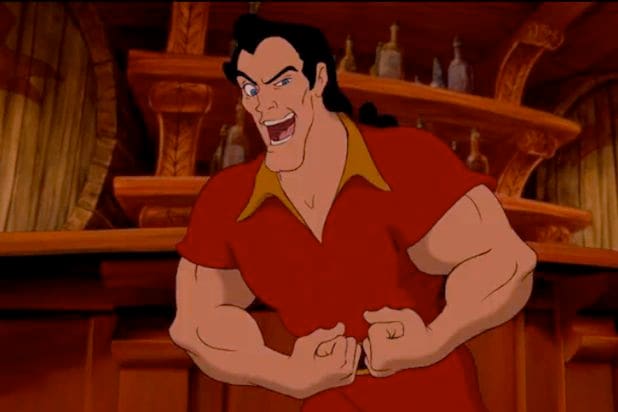
In an ironic twist, it was reported that Gaston LeGume, the egotistical misogynist and racist villain from Disney’s Beauty and The Beast, recently assumed the identity of Florida Governor DeSantis.
No longer content merely to be the handsomest most admired man in town and everyone’s favorite guy, Gov. Ron “Gaston” DeSantis now seems to be on a quest to punish his creator – The Walt Disney Company — for gross intransigence.
Last week, DeSantis announced a move to take away Disney’s independent special district, the Reedy Creek Improvement District, created in 1966 as a Florida Special Taxing and Governance District.
Gov. Gaston went on to say, “When Disney denounced Florida’s “Parental Rights in Education” bill, they crossed the line. As a family-friendly business it should understand parents not wanting young children taught about gender identity in public schools.” <Gaston then publicly abdicated any and all personal rights of succession within the Disney Empire.>
The Walt Disney Company responded quickly. “We are dedicated to standing up for the rights and safety of LGBTQ+ members of the Disney family, as well as the LGBTQ+ community in Florida and across the country” they said. “It is clear that this is not just an issue about a bill in Florida, but instead yet another challenge to basic human rights.”
Last seen in The Villages, Gov. Gaston DeSantis proclaimed, ‘I am The Governor. Any and all executive orders, proclamations, and rules I proclaim shall have the full force and effect of law. There is no place in a civil and just society for elementary math textbooks which indoctrinate elementary school students with concepts like race essentialism. Furthermore, although the Citizens United decision gives corporations and certain special interest groups the right to unlimited spending on most political issues, it does not give any rights to corporations to create a regional environment virtually free of crime, mosquitos, weeds, trash and potholes which attracts tourists from international destinations.’
DeSantis further stated, ‘It is patently clear that The Disney Company operates in a physical environment which is well above the Florida ‘status quo’, much of that due to The Reedy Creek Improvement District which owns its utilities; administers its planning and zoning; defines its building codes; employs the inspectors; and maintains its own fire department, roadways and highways. It even has the authority to levy taxes.’
Currently, Florida has term limits for some elected officials. The Governor is limited to two 4-year terms.
The Walt Disney Company has served as an important magnet for tourism and economic development in Florida since it opened in 1971, and it has no term limits.
Florida’s tourism industry suffered an estimated 60.5% drop in visitors as the coronavirus pandemic hit hard during the 2nd quarter of 2020, with international travel off more than 90%. Disney World has mostly recovered, trending back to 50 million tourists a year and generating more than 70,000 jobs directly, making it the biggest single-site employer in the U.S. The millions of tourists visiting Disney World not only spend money at the resort but also across the Orlando region and the entire state of Florida.
We can pause and pay our respects to Florida’s elected officials – including the Governor[i] – who lost millions in potential political contributions from Disney when the Company decided to cease making political contributions in Florida. <In fact, ‘pay to play’ is illegal for very good reasons.>
Gov. Ron ‘Gaston’ DeSantis and his cronies have devolved into the Boss Tweed era of Tammany Hall, and it’s time that we stop them in their tracks.
“No one’s slick as Gaston; No one’s quick as Gaston; No one’s neck’s as incredibly thick as Gaston; For there’s no man in town half as manly”….
Ron “Gaston” DeSantis is an uncouth and unprincipled bully who has no place in public office.
[i] Disney Worldwide Services, Inc. made four contributions to the Friends of Ron DeSantis PAC from May 2019 to March 2021 for a total of $106,809.38.
DeSantis & Financial Literacy
March 29, 2022
Florida Governor Signs Financial Literacy Bill
Here is a summary of the recent Florida Financial Literacy announcement as I understand it,
‘On March 22, 2022, Florida Gov. Ron DeSantis signed Senate Bill 1054, titled the Dorothy L. Hukill Financial Literacy Act, which will require high school students to take a financial literacy course to receive a standard high school diploma.
The legislation will officially become a graduation requirement for students who enter high school in the 2023-24 school year, and will not affect students currently enrolled in high school.
“Financial literacy is an important life skill for a student to have,” said DeSantis. “Ensuring our students have the skills to manage their finances – and perhaps one day own a business – will pay dividends for our state. I am proud to sign this bill to support the future of Florida’s students and ultimately their families and communities.”
Students will be required to earn one-half credit in personal financial literacy and money management, including instruction on types of bank accounts, credit scores, taxes and managing debt.’
During my career in banking and financial services, I spent over 2 decades seeking solutions to our national intellectual deficit in the area of personal economic and financial literacy.
Much of what I learned relates to relevancy. Young people who grew up in a household where Amscot was the financial provider of choice won’t relate to traditional banks. And, a young person with no job and no viable prospects for a future career which will generate a reliable income stream isn’t a good candidate for learning about bank accounts, credit scores, etc.
What I found in my practical research was that the very best solution to engaging students – probably beginning at middle school, and certainly at the high school level – involves thoughtful inclusion of economic concepts into the social studies curriculum.
Virtually everything in the history of mankind involves an economic component which can be carefully woven into the history itself.
The feudal system, which flourished in Europe until about 1500, continues to exist in the U.S. and other nations, disguised by new labels and promoted by clever marketing schemes.
Then, there was slavery. The underlying reason for the extraordinary prosperity of plantation owners in the southern U.S. states producing cotton, tobacco, rice, and sugar wasn’t due to their intelligence: it was completely due to slave labor.
Today, we have the overarching issue of student debt. Those who have been educated and informed about ‘opportunity costs’ are (at least) inoculated against the commissioned charlatans who offer promises of obscene salaries for completion of certain certificate or degree programs — with no real supporting facts – “just sign on the dotted line and you will never regret it”.
Today, we have a financial sector (“Wall Street”) which extracts tremendous costs out of each and every financial transaction. For virtually no value-added, an investment bank transaction takes at least 25% off the top, providing immediate (and arguably excessive) financial rewards to certain economic pirates — analysts, associates and managing directors — while adding zero benefit to our overall economy.
The recent ‘Great Recession’ (2007 – 2009) was enabled by a broad contingent of economically illiterate consumers who were duped by an equally inept cohort of financially and economically illiterate brokers. The common theme: A relatively small group of mathematical practitioners – economic pirates — who created theoretical models which proved to be defective in practice.
The current frenzy centered on Cryptocurrency is likely another economic trap conjured up by economic pirates. The underground economy has been somewhat stifled by a 1969 decision of the U.S. Treasury to discontinue $500 and $1,000 bills. Can you just imagine an illicit $500,000 cash transaction conducted using $100 bills? Laundered money, converted into cryptocurrency, is the perfect medium through which to consummate the transaction. Drugs? Weapons? Real Estate? The sky is the limit.
Best I can tell, nothing in the Florida bill addresses the basic issues which American adults need to be aware of. A good understanding of fundamental economic principles is the foundation of a comprehensive financial and economic education, and I don’t think those concepts are imbedded anywhere in this Florida legislation.
Fundamental Christianity in 2022
January 29, 2022
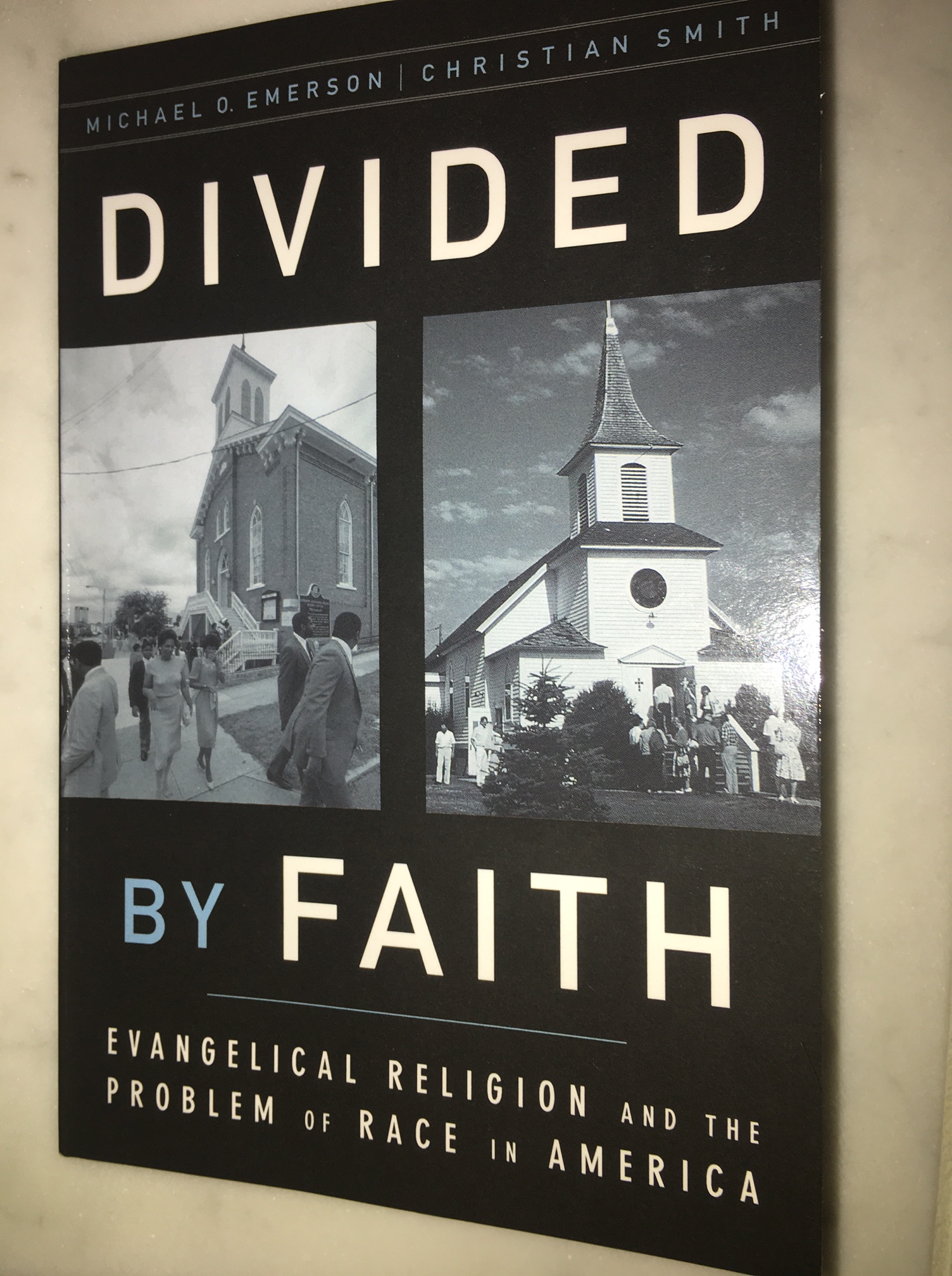
The Dangerous Intersection of Evangelical Christianity with White Supremacy
White supremacy sometimes manifests as colorism, a persistent issue within India, Latin America, Africa and nearly every community of color. When a mother tells her children not to play out in the sun because their skin will get too dark, she is reinforcing the myth of white supremacy by encouraging proximity to whiteness via lighter skin.
The most dangerous combination seems to occur at the intersection of Fundamental (Evangelical) Christianity and White Supremacism – the belief that Caucasians are superior to all other races.
Fundamental/Evangelical Christianity states that ‘only those who trust in Jesus Christ alone as their Savior receive God’s free gift of eternal salvation’.
White Supremacists adhere to the aberrant beliefs that (a) Whites must have dominance over people of other backgrounds, especially where they may co-exist; and (b) White people are genetically superior to other people.
In a 2019 nationwide survey, 86% of white evangelical Protestants and 70% of both white mainline Protestants and white Catholics said that the “Confederate flag is more a symbol of Southern pride than of racism”; nearly two-thirds of white Christians overall said that killings of African-American men by the police are isolated incidents rather than part of a broader pattern of mistreatment; and more than 60% of white Christians disagreed with the statement that “generations of slavery and discrimination have created conditions that make it difficult for blacks to work their way out of the lower class.”
The Southern Baptist Convention itself was organized prior to the Civil War in Georgia by Southern Baptists who were strongly opposed to the abolition of slavery. It delivered the invocation when Jefferson Davis was inaugurated as President of the Confederacy.
Today, the Southern Baptist Convention has a membership of over 16 Million, and is thought to be the second-largest Christian denomination in the U.S.
When I came of age in the late 1960’s in Buffalo, NY – a true northeast rustbelt city – we really didn’t have time for any of this nonsense, and I naively believed that our nation had progressed beyond the foolish notions of the Confederacy.
Four decades later, Donald Trump and his loyal following of ultra-conservative Evangelical Christian voters truly surprised and shocked me, and many others.
Robert Jones, a graduate of the Southwestern Baptist Theological Seminary, may have said it best when he stated that Trump inspired White Christians, “not despite, but through appeals to white supremacy,” attracting them not because of economics or morality, “but rather that he evoked powerful fears about the loss of White Christian dominance.”
You can deny if you like, but denial doesn’t change reality.
This is the year 2022, and there is no turning back.
We are competing in a 21st Century World Economy, and it is high time for those of us who don’t have time for all of this foolish nonsense to call the bluff of the revisionist Confederate Civil War re-enactors.
Here in the U.S., we need to move on; come together; find common ground; join hands; and work side by side to strengthen our technology and innovation capabilities and return to a leadership role by influencing international economic, scientific, trade, and security institutions.
Alternatively, we could continue to allow petty and insignificant micro-inequities to distract and divide us domestically, which will encourage other nations to move aggressively to assert leadership and shape the direction of global rules and institutions.
An Economic Genius: Part 2
August 1, 2019
A few weeks ago, I shared some thoughts about our current President and his economic credentials.
Donald John Trump was one of 366 student members of the class of 1968 who was awarded a Bachelor of Science degree in Economics from the Wharton School of Finance and Commerce at the University of Pennsylvania.
Other than his bachelor’s degree and some experience working in the family real estate business, there is no evidence that Mr. Trump has pursued additional education, credentials or capabilities in the field of economics.
Trump’s paucity of bona fides in the world of economic theory and practice has not deterred him from taking an active role in testing new economic theories and concepts.
Below, I introduce a new chapter in my observations on Donald Trump’s economic strategy:
…………………….…………………………………………………………………………………………………………………………………..
July 31, 2019 (Wednesday): Federal Reserve Chairman Powell reluctantly announced a 25bp cut in the federal funds rate, the first rate cut in over a decade (December 2008). In his announcement, Chairman Powell cited, “implications of global developments for the economic outlook as well as muted inflation pressures”. The Fed also referenced an apparent global economic slowdown; uncertainty around U.S.-China trade negotiations; and ‘stubbornly low inflation’.
August 1, 2019 (Thursday): Donald Trump announced (in a series of tweets) that the U.S. would impose a new 10 percent tariff on certain goods from China beginning on September 1, 2019, following the news that trade talks with the China have failed to make sufficient progress.
These new tariffs will apply to the $300 Billion of Chinese goods which had not before faced a tariff. Another $250 Billion of Chinese goods will continue to be tariffed at a 25 percent rate.
This abrupt and unusual move roiled the equity markets, creating a major sell-off.
Since late 2018, the U.S. economy has been showing signs of slowing — bond markets are flaccid; GDP has slowed; new home sales are generally flat; and business investment is anemic, at best.
Virtually every main-stream economist agrees that Trump’s trade war is contributing to the domestic economic malaise, although it’s too early to determine by how much, and if the damage is permanent.
The Fed rate cut on Wednesday was accompanied by a caveat that one purpose was to help create a barrier to prevent Trump’s trade wars from toppling our domestic economy.
Thursday’s surprise announcement by Trump reveals a new, arbitrary, capricious and unilateral decision by the White House which will result in higher taxes to Americans on imports; and further expand uncertainty for businesses which need significant time to manage their supply chains.
The agricultural sector in the U.S. – farms and ancillary industries, suppliers, manufacturers, etc – are already fighting the unexpected impacts of climate and weather on production. Then, they were handed a potential death sentence by a White House which is guided not by strategy and planning, but by impetuous and arbitrary policy changes driven by Trump’s narcissistic compulsions.
If Trump’s Trade War battle plans were conceived within a coordinated environment (i.e. in concert with the Fed and the Congress) perhaps we would be able to see a pathway toward successful outcomes.
Trump is consistent in his bravado that he – and he alone – has the vision, wisdom and solutions to create equilibrium in the trade accounts between the U.S. and China.
According to a BBC analysis from May 2019, “Trump’s decision to take on China could lead to adverse effects for consumers in the US and in China, but also worldwide. An economic showdown between the world’s biggest economies doesn’t look good for anyone.”
Article I of the US Constitution vests the power to set tariffs in Congress, thus Congress has the power to stop this President from continuing his arbitrary and impetuous trade war. The question remains: Will elected officials in Congress wake up, do their job and use that power, or will they continue to abdicate legislative responsibilities to this President?
 walrus51